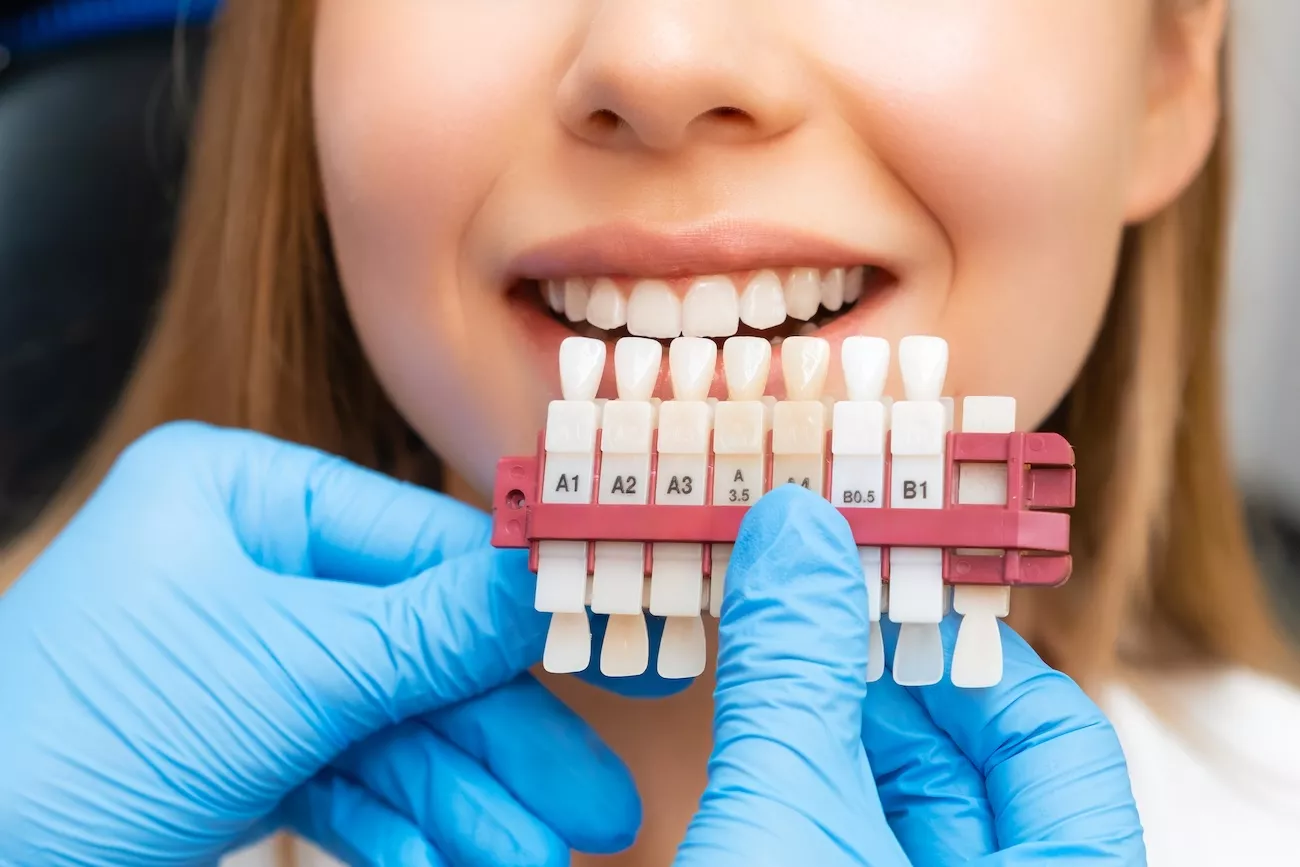
How Much Does Teeth Whitening Cost in the UK? Professional vs At-Home Prices
August 20, 2026
Confused about what teeth whitening really costs in the UK? We compare professional and at-home options side by side, so you can choose the route that fits your smile and your budget.
If you have ever caught yourself smiling a little less confidently in photos, or noticed your teeth look duller than they used to after years of tea, coffee or red wine, you are not alone. Teeth whitening is one of the most requested cosmetic treatments in UK dentistry, and one of the first questions almost every patient asks is simple: how much is this actually going to cost?
The honest answer is that it depends on the route you take. Professional whitening carried out by a dentist and at-home kits sit at very different price points, and the gap between them says a lot about what you are really paying for. In this guide, we break down both options clearly, so you can weigh up the cost against the results, safety and convenience each one offers, and decide what is right for your smile and your budget.
In the UK, professional teeth whitening carried out by a dentist typically costs more than shop-bought alternatives, reflecting the custom fit, dentist supervision and stronger, longer-lasting results involved. At-home kits supplied by a dentist sit in the middle, offering many of the same benefits at a lower price than in-chair treatment. Over-the-counter strips, pens and gels are the cheapest option but generally produce more modest, shorter-lived results and carry more risk when used without professional guidance.
The right choice comes down to how dramatic a result you want, how quickly you want to see it, and how much reassurance you want from having a dental professional oversee the process.
Ask five different people what they paid for teeth whitening, and you will likely get five different answers. That is because the price is shaped by several factors working together, not a single fixed fee.
The method matters most. In-chair whitening using professional-grade bleaching agents and specialist equipment costs more to deliver than a tube of whitening toothpaste, simply because the technology, materials and clinical time involved are far more significant. Custom-made trays, which are moulded precisely to your teeth, also add cost compared with generic, one-size-fits-all products.
Who provides the treatment matters too. A dentist is trained to assess your oral health first, identify the cause of any staining, and use professional-strength whitening agents safely under clinical supervision. That expertise and safety net is built into the price. Shop-bought kits skip this assessment entirely, which is part of why they cost less but also why results and safety can be far less predictable.
Finally, how many sessions or how long a course of treatment runs will affect the overall cost. A single in-chair appointment is priced differently to a multi-week custom tray programme, even though both fall under the umbrella of "professional whitening."
Professional teeth whitening is carried out or supervised by a qualified dentist, using bleaching agents that are significantly stronger than anything available on the high street. This is the option most likely to deliver a noticeably brighter smile, often several shades lighter, and the results tend to last considerably longer than at-home alternatives.
At Richmond Dental, professional whitening typically begins with a consultation to check that your teeth and gums are healthy enough for treatment and to talk through the result you are hoping to achieve. From there, custom trays are made from an impression of your own teeth, ensuring the whitening gel sits evenly against every tooth rather than pooling unevenly or irritating your gums, which is a common complaint with generic, store-bought trays.
Because professional whitening is a cosmetic treatment, pricing varies depending on the exact system used and the number of sessions your smile needs to reach your desired shade. Rather than quoting a generic UK average that may not reflect what you would actually pay, we would always recommend visiting our teeth whitening page or booking a consultation with our team, so you receive an accurate, personalised quote based on your own teeth rather than an estimate. You can also view our full breakdown of treatment charges on our fees page.
What you are paying for with professional whitening is not just the whitening gel itself. It is the clinical assessment that rules out underlying issues before treatment starts, the custom fit that protects your gums and maximises results, and the ongoing support of a dental team who can advise on maintenance once your treatment is complete.
At-home whitening sits in two very different camps, and it is worth understanding the difference before you buy.
The first is a dentist-supplied take-home kit. This uses the same principle as in-chair whitening, custom trays and a professional bleaching gel, but is designed to be worn at home over a period of days or weeks rather than completed in a single clinic visit. Because it is still overseen by a dentist and uses professional-strength ingredients, it generally costs less than in-chair treatment but more than anything you would pick up in a shop, and it tends to deliver results much closer to professional in-chair whitening than off-the-shelf products can manage.
The second is the over-the-counter route: whitening strips, pens, gels and generic trays bought online or from a pharmacy. These are by far the cheapest option, often available for a fraction of the cost of dentist-led treatment. However, the concentration of active ingredient in these products is capped by law at a much lower level than what a dentist is permitted to use, which is part of why results tend to be milder, slower to appear, and shorter-lived. Ill-fitting generic trays can also lead to gel leaking onto the gums, causing irritation, and there is no professional check beforehand to confirm whitening is even a suitable option for your teeth.
For anyone who has tried shop-bought products with disappointing results, a dentist-supplied take-home kit is often the natural next step, offering a noticeably better outcome without the full cost of in-chair treatment.
Choosing between professional and at-home whitening really comes down to three questions: how much of a difference you want to see, how quickly you want to see it, and how comfortable you are managing the process without clinical oversight.
If you want the most dramatic, reliable result and are happy to invest in that outcome, in-chair professional whitening delivers the fastest and most noticeable change, often within a single appointment, with a dentist checking your teeth and gums throughout. If you are working towards a similar result but would prefer to whiten gradually in your own time, a dentist-supplied take-home kit offers much of that same quality and safety at a more accessible price point. If budget is the main driver and you are chasing a subtler, gradual improvement rather than a dramatic transformation, over-the-counter products are the lowest-cost route, though they come with the least predictable results and the least protection if something does not fit or feel right.
There is also a safety dimension worth weighing against the price tag. Professional whitening, whether in-chair or take-home, is only ever provided after a dentist has confirmed your teeth and gums are suitable for treatment. This matters because tooth sensitivity, gum disease and untreated decay can all be made worse by whitening if they go unchecked, something a shop-bought kit simply cannot screen for.
This is one of the most common questions we hear, and the answer is straightforward: teeth whitening is classed as a cosmetic treatment, which means it does not fall under NHS Band 1, Band 2 or Band 3 charges, and is not covered on the NHS except in rare cases where discolouration is linked to a specific clinical need identified by a dentist.
If you are hoping to whiten your teeth, this is a private treatment across the board in the UK, whether you choose an in-chair appointment, a dentist-supplied take-home kit, or a product from a shop. Understanding this upfront helps avoid any surprise when a treatment plan comes back as a private fee rather than an NHS charge.
When carried out or supervised by a dentist, teeth whitening is a safe, well-established cosmetic treatment. Before any whitening begins, your dentist will check for signs of gum disease, tooth decay or existing dental work, all of which can affect how suitable whitening is and how your teeth might respond.
The most common side effect is temporary tooth sensitivity, particularly to hot or cold, which usually settles within a few days of finishing treatment. Because professional whitening gels are used in controlled concentrations and applied using a custom-fitted tray, the risk of gum irritation is significantly lower than with generic, ill-fitting shop-bought alternatives.
It is worth noting that whitening only works on natural tooth enamel. It will not change the colour of crowns, veneers, fillings or bridges, so if you have existing restorative work at the front of your mouth, it is worth discussing this with your dentist beforehand to avoid an uneven result.
Results vary from person to person, but professionally whitened teeth typically stay noticeably brighter for anywhere between six months and two years, depending on your diet, lifestyle and oral hygiene habits. Frequent consumption of tea, coffee, red wine or tobacco will naturally cause staining to return more quickly, while good daily brushing and regular dental check-ups help maintain results for longer.
Many patients choose to use an occasional top-up treatment, often with the custom trays made during their original whitening course, to keep their smile at its brightest without needing a full treatment again from scratch.
Teeth whitening pricing genuinely does depend on your teeth, your goals and the method that suits you best, which is why we would always rather give you an accurate figure than a generic online estimate. As a trusted dental practice in Malvern, Worcestershire, Richmond Dental has built its reputation on transparent pricing and treatment plans tailored to each patient, not one-size-fits-all packages.
If you are ready to find out what teeth whitening would cost for your smile, visit our teeth whitening page to learn more about how we approach treatment, or get in touch to book a consultation. Our team will talk you through your options, answer any questions, and help you choose the route that fits both your smile goals and your budget.
Professional in-chair or take-home whitening costs more than shop-bought products because it includes a clinical assessment, custom-fitted trays and dentist supervision throughout. Pricing depends on the system used and how many sessions your teeth need, so the most accurate figure comes from a consultation rather than a generic average.
No. Teeth whitening is a cosmetic treatment and falls outside NHS Band 1, 2 and 3 charges. It is available privately, regardless of whether you choose in-chair, take-home or shop-bought whitening.
Yes, when carried out or supervised by a dentist. A pre-treatment check for gum disease and decay, combined with custom-fitted trays, keeps the risk of irritation low. The main side effect is temporary sensitivity, which usually settles within a few days.
Typically between six months and two years, depending on diet, lifestyle and oral hygiene. Avoiding staining foods and drinks, and using occasional top-up treatments, helps results last longer.
If you have any questions about the topics covered in our articles, please don't hesitate to reach out to our Malvern dentists.
Contact Our Local Dentists