How Much Does a Dental Check-Up Cost? NHS Band Charges vs Private Fees
July 8, 2026
Wondering how much a dental check-up really costs? This guide breaks down current NHS Band 1 charges alongside Richmond Dental's transparent private fees, so you know exactly what to expect before you book.
On the NHS, a routine dental check-up costs £27.90, charged under Band 1. Privately, a check-up typically costs between £50 and £150, depending on the practice, your location and whether you're a new or returning patient. At Richmond Dental in Malvern, a routine private examination is £68, and a new patient examination is £75.
If that's all you needed to know, you now have your answer. But the full picture, what each price actually includes, why costs vary so much, and how to work out which option makes sense for you, is worth ten minutes of your time. Here's everything you need to know about dental check-up costs in the UK.
On the NHS, every routine check-up is charged at the Band 1 rate of £27.90, whether you're a new patient or you've been registered for years. Privately, the price depends more on your history with the practice. At Richmond Dental, a new patient examination costs £75, while a routine examination for an existing patient is £68. If X-rays are needed, these are charged at £12.50 per image, and a fluoride varnish, where appropriate, is £7.50.
NHS dental treatment in England is charged using three fixed-price bands. Whatever treatment you need, you'll only ever pay the cost of the highest band involved, even if you need several visits to complete it.
Band 1 costs £27.90, and this is the band a routine check-up falls under. It covers the examination itself, along with diagnosis and advice. If your dentist decides you need them, X-rays and a scale and polish are also included at no extra cost within this band.
Band 2 costs £76.60 and includes everything in Band 1, plus further treatment such as fillings, root canal work, or having a tooth removed.
Band 3 costs £332.10 and covers everything in Bands 1 and 2, plus more complex treatment such as crowns, dentures, bridges and orthodontic appliances.
The key thing to understand is that you're charged once per course of treatment, not once per appointment. So if your check-up leads to a filling, you'll pay the Band 2 rate rather than paying for the check-up and the filling separately.
Some groups don't pay NHS dental charges at all, including children under 18, or under 19 if in full-time education, pregnant women and those who've had a baby in the last 12 months, and people receiving certain benefits, such as Universal Credit or Pension Credit, subject to income thresholds.
It's also worth knowing that NHS dental charges work slightly differently in Scotland, Wales and Northern Ireland. In Scotland, routine check-ups are free for everyone. If you're unsure whether you qualify for help with costs, our team can talk you through it, or you can check our fees page for the full breakdown.
Across the UK, private check-ups generally range from around £50 to £150 or more. Where you live makes a real difference here. Practices in London and the South East tend to charge towards the top of that range, largely because of higher rent and running costs. In areas like Worcestershire, private check-ups are typically more affordable without any compromise on quality of care.
We believe check-up pricing should be straightforward, so here's exactly what we charge. A new patient examination or emergency appointment is £75, while a routine examination for existing patients is £68. X-rays are charged at £12.50 per image, and a fluoride varnish is £7.50.
There are no hidden extras. If your check-up shows you need further treatment, we'll always explain the cost and your options clearly before anything goes ahead. You can find the full, up-to-date list on our fees page, and more details on what's involved in an appointment on our dental check-up page.
Cost is only part of the story. Here's an honest comparison of what tends to differ between an NHS and a private check-up.
An NHS appointment is typically shorter, often around 10 to 15 minutes, while a private appointment tends to run longer, giving more time for discussion and questions. NHS waiting lists can have limited capacity in some areas, whereas private appointments are generally easier and quicker to book. Cost-wise, the NHS charges a fixed Band 1 fee, while private practices set their own rates. In both cases, though, the core of the appointment is the same: a proper clinical examination, X-rays where clinically needed, and a scale and polish if required.
Neither option is automatically better for everyone. It genuinely depends on what's available to you locally, how quickly you need to be seen, and what matters most to you in an appointment.
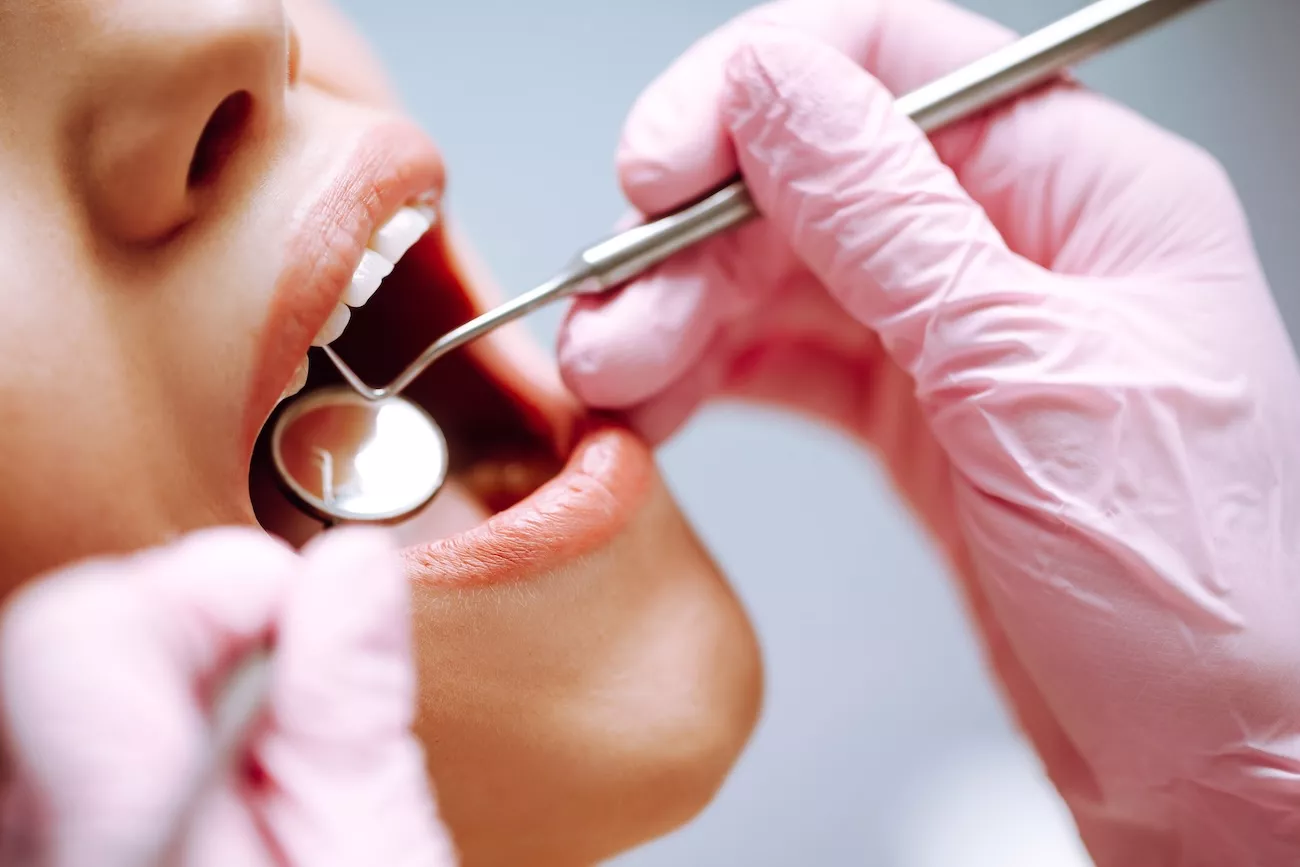
Whether you're seen on the NHS or privately, a proper dental check-up covers more ground than most people realise. At Richmond Dental, every examination includes a thorough visual examination of your teeth, checking for decay, cracks or damage, along with an assessment of your gums for signs of inflammation, bleeding or gum disease.
We also carry out a soft tissue and oral cancer screening, checking your tongue, cheeks and the rest of your mouth, and take X-rays where clinically necessary to spot problems that aren't visible to the naked eye. Beyond the clinical checks, we'll talk to you about your general health, since conditions and medications can affect your oral health too, and offer advice on diet, smoking and drinking, and how these habits affect your teeth and gums.
We'll also cover your brushing and flossing routine, explain clearly any treatment you might need along with the associated costs, and confirm when your next check-up should be. You can read more about what to expect on our dental check-up page.
A few factors explain why prices vary so much from one practice or one part of the country to another. Location plays a significant role, since practices in cities and the South East generally have higher overheads, which is reflected in their fees. Whether you're a new or returning patient matters too, as a first visit usually takes longer while the dentist builds a full picture of your dental history, which is why new patient examinations often cost more.
Whether X-rays are needed also affects the final price, since some practices include these within the examination fee while others charge separately. NHS availability in your area can influence pricing as well, since where NHS appointments are hard to come by, more people turn to private care, which can affect how practices price their services. Finally, the practice itself matters: equipment, staffing and the experience of the dentist all play a part in the fee you're quoted.
This comes down to your individual circumstances rather than a one-size-fits-all answer. If you have access to an NHS dentist and can get an appointment within a reasonable timeframe, the Band 1 charge is by far the most affordable option, and it covers everything a routine check-up needs to.
If NHS appointments aren't readily available where you live, or you'd simply prefer a private appointment, it's worth thinking about the cost of a check-up in context. A small cavity spotted early usually means a straightforward, affordable filling. Left unnoticed for a year or two, that same problem can progress to root canal treatment or even extraction, both of which cost considerably more than a check-up ever would. Regular check-ups, NHS or private, are one of the most cost-effective things you can do for your long-term oral health.
Most adults with good oral health are advised to have a check-up every six months, though your dentist may recommend a different interval based on your individual risk. Patients with active gum disease or a history of frequent decay may be seen every three to four months, while most adults fall into the standard six-monthly pattern. Patients with consistently excellent oral health and a low risk of decay may only need an annual check-up.
It's worth clearing up a common misunderstanding here: being recommended more frequent check-ups doesn't mean paying more overall, since you're charged per visit rather than per year. If your dentist suggests seeing you more often, it's about catching problems early, not increasing your bill.
Keeping up with check-ups isn't just about you. Children, in particular, benefit from getting into the habit early, and regular family check-ups make it far easier to catch small issues before they become bigger ones. At Richmond Dental, we welcome NHS and private patients of all ages, and our team is happy to help you get the whole family booked in. You can find out more about our approach to patient care on our about page.
On the NHS, a routine check-up costs £27.90, under Band 1. Privately, prices typically range from £50 to £150 or more, depending on the practice and your location. At Richmond Dental, a routine examination for existing patients is £68, and a new patient examination is £75.
An NHS dental check-up falls under Band 1, currently priced at £27.90. This covers the examination, diagnosis and advice, along with X-rays and a scale and polish if your dentist decides these are clinically necessary.
Private check-up costs vary by practice and location, generally ranging from £50 to £150 or more across the UK. At Richmond Dental, a routine examination is £68 for existing patients and £75 for new patients, with X-rays charged at £12.50 each.
Not for most adults, though certain groups qualify for free NHS dental treatment, including children under 18, those in full-time education under 19, pregnant women, those who've had a baby in the past 12 months, and people receiving certain benefits.
Prices are affected by location, whether you're a new or returning patient, whether X-rays are needed, local NHS availability, and the individual practice's running costs and equipment.
Most adults should have a check-up every six months, though your dentist may recommend more frequent visits if you have active gum disease or a history of decay, or less frequent visits if your oral health is consistently excellent.
Whether you're due an NHS check-up or you're considering a private appointment, Richmond Dental offers clear, upfront pricing with no hidden costs. Take a look at our full fees page for the complete list of NHS and private charges, or get in touch to book your next check-up today.
If you have any questions about the topics covered in our articles, please don't hesitate to reach out to our Malvern dentists.
Contact Our Local Dentists